
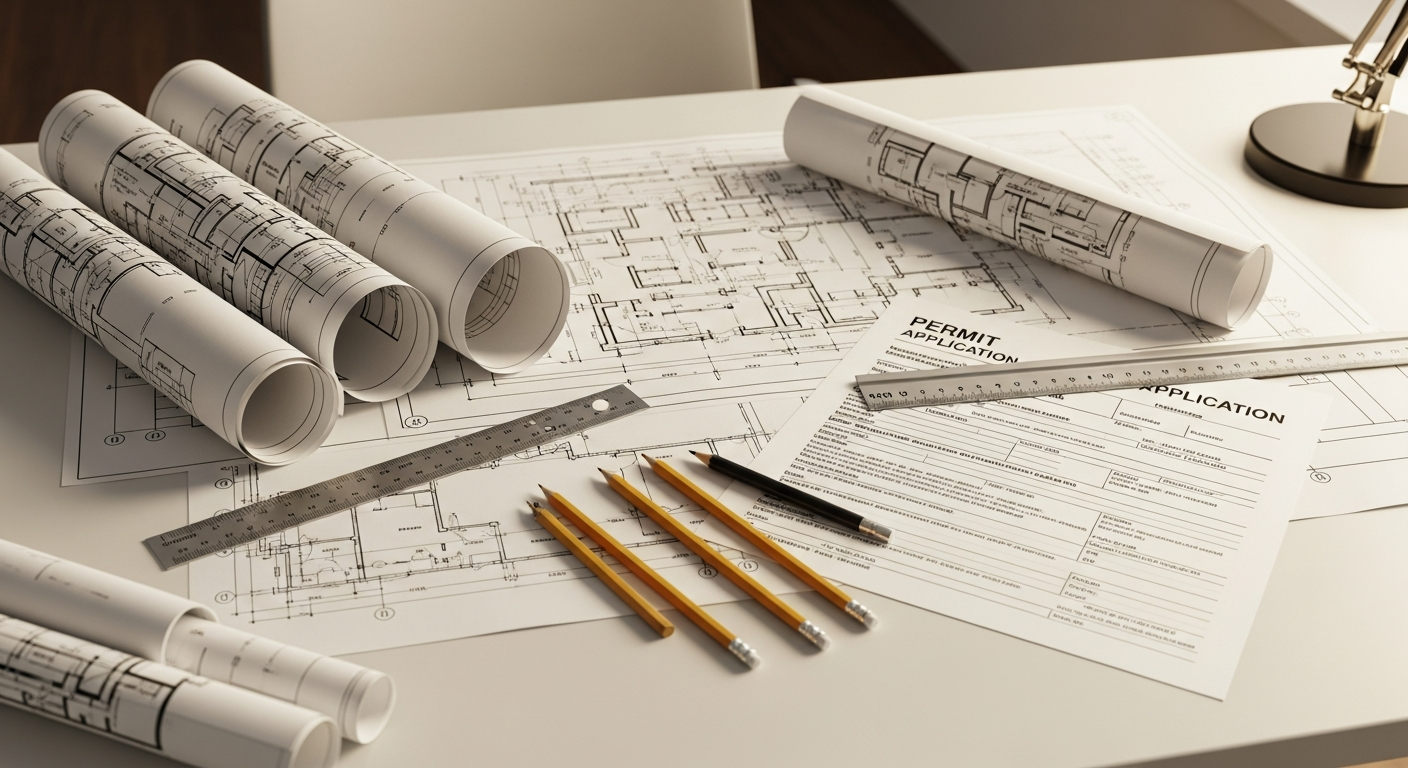
The building permit application process represents a critical gateway in any construction project, serving as both a regulatory requirement and a safeguard for property owners and communities. According to the International Code Council, approximately 90 million building permits are issued annually in the United States, ranging from simple residential repairs to complex commercial developments (ICC, 2023). Understanding this process thoroughly can mean the difference between a smooth construction experience and costly delays. This comprehensive guide provides homeowners with the knowledge and strategies needed to navigate the permit application process successfully.
Why Building Permits Matter
Building permits serve multiple essential functions that protect homeowners, communities, and future property owners. The National Association of Home Builders emphasizes that permits are not bureaucratic obstacles but rather safety mechanisms that ensure construction meets established standards (NAHB, 2023). Understanding the broader context of building code violations helps homeowners appreciate why permits matter.
Safety Verification
The primary purpose of building permits is to ensure that construction work meets safety codes designed to protect building occupants. The U.S. Consumer Product Safety Commission reports that residential building code violations contribute to thousands of preventable injuries annually (CPSC, 2023). Permits trigger inspections that verify electrical systems are properly installed, structural elements can support required loads, and fire safety requirements are met.
Property Value Protection
Permitted work contributes fully to property value, while unpermitted work may be discounted or disqualified entirely during appraisals. The Appraisal Institute notes that properly permitted improvements typically add full value to property assessments, while unpermitted work may add nothing or even decrease value due to liability concerns (Appraisal Institute, 2023). If you're dealing with existing unpermitted work, our guide on how to legalize unpermitted work provides step-by-step assistance.
Insurance Coverage
Insurance companies rely on permit records to assess property conditions and coverage eligibility. The Insurance Information Institute explains that unpermitted work can void coverage for related losses, leaving homeowners financially exposed (III, 2023). Proper permits ensure that insurance protections remain intact.
Legal Compliance
Permits establish a legal record of construction work and its compliance with applicable codes. This documentation protects property owners from future enforcement actions and provides valuable information for property transactions. The American Bar Association notes that permit records are frequently referenced in real estate disputes and liability cases (ABA, 2023).
Need Help With Your Building Code Violation?
Get expert guidance from our team. Free consultation, 98% success rate, nationwide service.
When Permits Are Required
Understanding when permits are required prevents costly violations and ensures project success. While requirements vary by jurisdiction, certain types of work almost always require permits:
Work That Typically Requires Permits
Structural Work: Any modification to load-bearing walls, foundations, or framing typically requires permits. This includes room additions, roof changes, and opening or closing walls. The American Society of Civil Engineers emphasizes that structural work without proper engineering review can create dangerous conditions (ASCE, 2023).
Electrical Work: New circuits, panel upgrades, and most wiring work require electrical permits. The National Fire Protection Association reports that improper electrical work is a leading cause of residential fires, making electrical permits particularly important (NFPA, 2023). Learn more about specific requirements in our electrical code violations guide.
Plumbing Work: Moving or adding fixtures, water heater installations, and drainage modifications require plumbing permits. The International Association of Plumbing and Mechanical Officials notes that improper plumbing can create health hazards through cross-contamination and sewage backup (IAPMO, 2023).
HVAC Systems: Furnace replacements, air conditioning installations, and ductwork modifications typically require mechanical permits. These permits ensure that heating and cooling systems are properly sized, installed, and vented.
Windows and Doors: Replacing windows or doors with different sizes or types, or adding new openings, generally requires permits. Egress requirements, including those covered in our fire safety code violations guide, and structural considerations make permit review important for this work.
Work That May Not Require Permits
Some minor work may be exempt from permit requirements, though this varies significantly by jurisdiction. Painting and decorating typically do not require permits, nor do minor repairs using similar materials (replacing damaged siding with matching siding). Flooring replacement in most cases does not require permits, and basic landscaping typically falls outside permit requirements. However, the International Code Council recommends checking with local building departments before assuming any work is exempt, as exemptions vary widely (ICC, 2023).
The Application Process: Step by Step
Step 1: Pre-Application Research
Before submitting a permit application, gather essential information about your project and local requirements:
Zoning Verification: Confirm that your project complies with zoning regulations including setbacks, height limits, and use restrictions. The American Planning Association reports that zoning issues are a leading cause of permit delays (APA, 2023).
Code Requirements: Identify specific code requirements that apply to your project type. Current building codes include requirements for energy efficiency, accessibility, and fire safety that may affect project design.
Fee Estimates: Research permit fees to include in project budgets. The National League of Cities reports that permit fees average 1-3% of project value but vary significantly by location and project type (NLC, 2023).
Step 2: Documentation Preparation
Complete permit applications require specific documentation that varies by project type:
Plans and Drawings: Most permits require scaled drawings showing existing conditions and proposed work. The American Institute of Architects recommends professional preparation of plans for complex projects to ensure accuracy and code compliance (AIA, 2023).
Specifications: Material specifications, equipment details, and construction methods may be required for review. Detailed specifications help reviewers verify code compliance.
Calculations: Structural, mechanical, and energy calculations may be required depending on project scope. Licensed engineers typically prepare these calculations.
Site Plans: Projects affecting building footprints or site features require site plans showing property lines, setbacks, and proposed changes.
Step 3: Application Submission
Submit your completed application with all required documentation and fees. Many jurisdictions now offer online submission, which can expedite initial processing. The International Code Council reports that electronic permit systems reduce average processing times by 40% compared to paper-based systems (ICC, 2023).
Step 4: Plan Review
Building department staff review submitted plans for code compliance. Review times vary significantly based on project complexity, department workload, and jurisdiction. The National Association of Home Builders reports that residential permit reviews range from same-day approval for simple projects to several weeks for complex applications (NAHB, 2023).
During review, departments may issue correction notices requesting additional information or plan modifications. Responding promptly and completely to these requests prevents delays.
Step 5: Permit Issuance
Once plans are approved and all requirements met, the building department issues the permit. This document authorizes construction and specifies required inspections. Keep permits accessible at the job site throughout construction.
Need Help With Your Building Code Violation?
Get expert guidance from our team. Free consultation, 98% success rate, nationwide service.
Inspection Requirements
Permits require inspections at specific construction stages to verify code compliance. Understanding inspection requirements helps prevent costly delays:
Common Inspection Points
Foundation Inspections: Before pouring concrete, inspectors verify excavation depth, rebar placement, and form accuracy. The American Concrete Institute emphasizes that foundation failures often trace to issues that proper inspection would have caught (ACI, 2023).
Framing Inspections: After structural framing is complete but before covering with drywall, inspectors verify proper connections, spacing, and load paths.
Rough Inspections: Electrical, plumbing, and mechanical rough-in inspections occur before systems are covered, allowing verification of proper installation.
Insulation Inspections: Energy code compliance is verified through insulation inspections that confirm proper installation and R-values.
Final Inspections: Comprehensive final inspections verify that all work meets code requirements and the project is safe for occupancy.
Scheduling Inspections
Most jurisdictions require advance notice for inspection scheduling, typically 24-48 hours. Electronic scheduling systems in many areas allow convenient online booking. Ensure all work is complete and accessible before scheduling inspections to avoid failed inspections and reinspection fees.
Common Challenges and Solutions
Processing Delays
Permit processing times vary widely and can significantly impact project schedules. Research from the Terner Center for Housing Innovation found that permit delays add an average of 7% to residential construction costs (Terner Center, 2023). Strategies to minimize delays include submitting complete applications with all required documentation, responding promptly to correction notices, considering expedited review options where available, and building permit processing time into project schedules.
Plan Corrections
Correction notices during plan review are common and shouldn't cause concern if addressed properly. The National Association of Home Builders reports that over 60% of residential permit applications receive at least one correction notice (NAHB, 2023). Working with experienced professionals who understand local requirements can reduce corrections.
Failed Inspections
Failed inspections extend project timelines and may incur reinspection fees. Common causes include work performed out of sequence, missing or improper materials, and code violations. Thorough preparation and quality construction minimize inspection failures. If you're building an ADU, our ADU permit requirements guide covers specific inspection considerations for these projects.
Working with Professionals
While homeowners can navigate the permit process independently for simple projects, professional assistance often proves valuable for complex work. Architects and designers prepare plans that meet code requirements and building department expectations. Contractors familiar with local processes manage permit applications and inspections efficiently. Permit expeditors specialize in navigating bureaucratic processes and can significantly reduce processing times.
Research from the Construction Management Association of America indicates that professionally managed permits are approved 35% faster than owner-managed applications (CMAA, 2023).
Digital Tools and Online Permitting
Technology is transforming the permit application process, making it more accessible and efficient for homeowners and professionals alike.
Online Application Systems
Many jurisdictions now offer comprehensive online permit portals that allow application submission, document upload, and fee payment. The International Code Council reports that jurisdictions with online systems process applications 40% faster than those relying on paper-based processes (ICC, 2023). These systems also provide real-time status tracking, reducing uncertainty during the review process.
Electronic Plan Review
Digital plan submission enables remote review by multiple disciplines simultaneously. Traditional sequential review, where each discipline reviews plans in turn, creates bottlenecks. Parallel electronic review can significantly reduce overall processing time. The National Association of Home Builders notes that jurisdictions using parallel electronic review approve permits an average of 15 days faster than those using sequential paper review (NAHB, 2023).
Virtual Inspections
Some jurisdictions now offer virtual inspection options for certain types of work. Using video technology, inspectors can verify work completion remotely. While not appropriate for all inspection types, virtual inspections can reduce scheduling delays and provide flexibility for both inspectors and property owners. The Government Technology Research Alliance found that virtual inspections reduced average inspection wait times by 60% in pilot programs (GTRA, 2023).
Permit Tracking Apps
Mobile applications from some jurisdictions allow permit holders to track status, schedule inspections, and receive notifications from their smartphones. These tools improve communication and reduce the need for phone calls and in-person visits to building departments.
Need Help With Your Building Code Violation?
Get expert guidance from our team. Free consultation, 98% success rate, nationwide service.
Understanding Permit Fees
Permit fees fund building department operations and vary significantly based on project type, scope, and jurisdiction.
Fee Structures
Jurisdictions use various fee calculation methods. Flat fees apply to simple projects like water heater replacements. Valuation-based fees calculate charges as a percentage of project value. Square footage fees apply per square foot of construction. Combination approaches use different methods for different project elements. The National League of Cities reports that residential permit fees average 1-3% of project value, with significant variation by location (NLC, 2023).
Additional Fees
Beyond basic permit fees, projects may incur additional charges including plan review fees, technology fees that support online systems, impact fees for new construction, and inspection fees for reinspections. Understanding the complete fee structure helps with accurate project budgeting.
Fee Waivers and Reductions
Some jurisdictions offer fee waivers or reductions for specific circumstances. Senior citizen discounts may apply in some areas. Energy efficiency improvements may qualify for reduced fees. Affordable housing projects often receive fee waivers. Emergency repairs may be processed with expedited review at no additional cost.
Permit Timeline Management
Effective timeline management is crucial for project success, particularly when permits are part of larger construction schedules.
Pre-Application Meetings
Many building departments offer pre-application meetings where staff review proposed projects and identify potential issues before formal submission. The American Institute of Architects recommends pre-application meetings for all complex projects, noting that they can prevent costly revisions and delays (AIA, 2023).
Expedited Review Options
Many jurisdictions offer expedited review for an additional fee. These programs prioritize applications and can reduce review times by 50% or more. The National Association of Home Builders reports that 65% of jurisdictions now offer some form of expedited review (NAHB, 2023). Expedited review is particularly valuable when project schedules are time-sensitive.
Phased Permits
For large projects, phased permitting allows work to begin on early phases while later phases remain under review. Foundation permits may be issued while building permits are still in review. This approach can significantly compress overall project timelines. The Construction Industry Institute notes that phased permitting can reduce total project duration by 15-25% for complex projects (CII, 2023).
Permit Extensions and Renewals
Permits typically expire if work is not completed within a specified period, often 6-12 months. Extensions are usually available, sometimes for a fee. Understanding expiration policies and extension procedures prevents permits from lapsing during construction delays.
Appeals and Dispute Resolution
When disagreements arise during the permit process, understanding available remedies helps protect property owner interests.
Code Interpretation Disputes
Code requirements are sometimes subject to interpretation, and disagreements between applicants and plan reviewers occur. Most jurisdictions have formal processes for requesting code interpretation rulings. The International Code Council recommends documenting all communications and requesting written explanations when interpretations seem inconsistent (ICC, 2023).
Formal Appeals
Building codes typically establish appeals boards or hearing officers who review disputed decisions. Appeals must usually be filed within specified timeframes and may require filing fees. The American Bar Association advises property owners to carefully follow appeal procedures and consider professional representation for significant disputes (ABA, 2023).
Variance Requests
When strict code compliance is impractical or unnecessary, variance requests provide a mechanism for alternative approaches. Variances require demonstrating that the proposed alternative provides equivalent safety and that strict compliance creates undue hardship. Successful variance requests require thorough documentation and often benefit from professional assistance.
Conclusion
The building permit process, while sometimes complex, serves essential functions in protecting property owners and communities. Understanding requirements, preparing complete applications, and working with experienced professionals ensures successful navigation of this important step in any construction project.
If you need help with a permit application or are dealing with permit-related issues, contact PermitPatch at (323) 591-3717 for a free consultation. Our team has extensive experience navigating permit processes across all 50 states.
References
American Bar Association. (2023). Construction Law and Permits. ABA Publishing.
American Concrete Institute. (2023). Foundation Construction Standards. ACI Publications.
American Institute of Architects. (2023). Residential Design Standards. AIA Publications.
American Planning Association. (2023). Zoning and Permit Integration. APA Press.
American Society of Civil Engineers. (2023). Structural Safety Guidelines. ASCE Publications.
Appraisal Institute. (2023). Permitted Improvements Valuation. AI Publications.
Construction Management Association of America. (2023). Permit Management Efficiency. CMAA Research.
Insurance Information Institute. (2023). Homeowner Insurance and Permits. III Publications.
International Association of Plumbing and Mechanical Officials. (2023). Plumbing Safety Standards. IAPMO.
International Code Council. (2023). Building Permit Administration. ICC Publications.
National Association of Home Builders. (2023). Residential Permit Survey. NAHB Research.
National Fire Protection Association. (2023). Electrical Safety Report. NFPA Publications.
National League of Cities. (2023). Municipal Permit Fee Survey. NLC Research.
Terner Center for Housing Innovation. (2023). Permit Processing Analysis. UC Berkeley.
U.S. Consumer Product Safety Commission. (2023). Home Construction Safety Report. CPSC.
Need Help With Your Building Permit?
Get expert guidance through the permit process. Free consultation available.
Schedule Free Consultation (323) 591-3717