
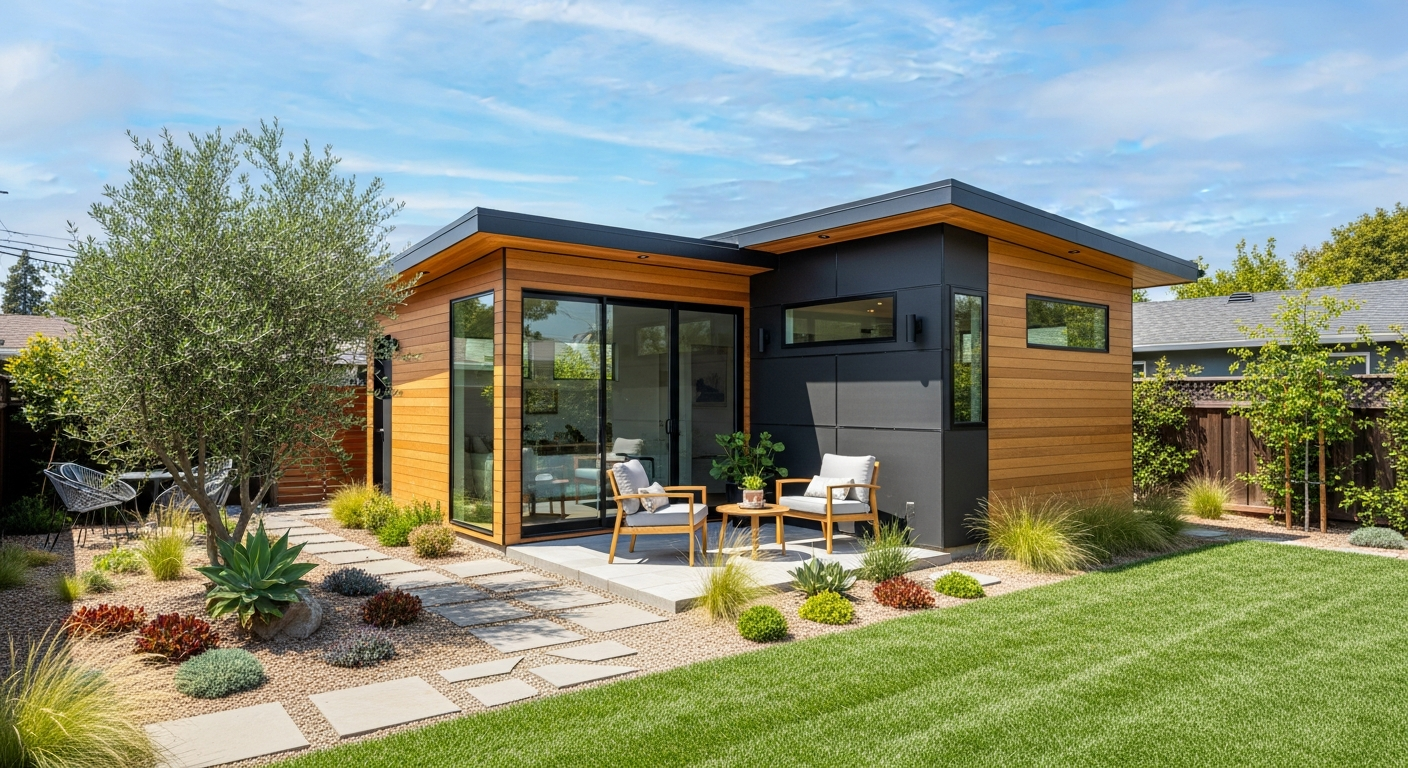
Accessory Dwelling Units (ADUs) have emerged as a significant solution to housing affordability and density challenges across the United States. According to the U.S. Department of Housing and Urban Development, ADU construction has increased by over 300% in the past decade, driven by housing shortages and legislative reforms making these units more feasible (HUD, 2023). This comprehensive guide provides homeowners with detailed information about ADU permit requirements, compliance strategies, and the path to legal accessory dwelling unit construction.
Understanding Accessory Dwelling Units
An accessory dwelling unit is a secondary residential unit on a single-family lot. ADUs take various forms including detached new construction (backyard cottages, granny flats), attached additions (connected to the primary residence), and conversion of existing space (garage conversions, basement apartments). The American Planning Association notes that ADUs provide housing opportunities while maintaining neighborhood character when properly designed and regulated (APA, 2023). Before beginning any ADU project, understanding building code requirements is essential.
Benefits of ADUs
ADUs offer multiple benefits for homeowners and communities. For homeowners, ADUs provide rental income potential that can help with mortgage payments and retirement planning. They offer flexible housing for aging parents, adult children, or caregivers. Property value typically increases with legal ADU construction. For communities, ADUs contribute to housing supply without changing neighborhood scale and support aging in place while promoting multigenerational households.
Types of ADUs
Detached ADUs: Stand-alone structures separate from the main house. These provide maximum privacy and flexibility in design but typically have higher construction costs. The National Association of Home Builders reports that detached ADUs average between 600-1,200 square feet (NAHB, 2023).
Attached ADUs: Connected to the primary residence through shared walls. These may be additions to existing structures or conversions of attached garages. Shared utilities can reduce construction costs.
Internal ADUs: Created within existing home footprints through basement or attic conversions. These typically have the lowest construction costs but may face ceiling height or egress window challenges.
Garage Conversions: Transforming existing garage space into living quarters. Common due to existing structure and utilities, though parking replacement may be required.
Need Help With Your Building Code Violation?
Get expert guidance from our team. Free consultation, 98% success rate, nationwide service.
Zoning Requirements
ADU development is governed by both zoning and building codes, with zoning requirements often presenting the initial regulatory hurdle.
Lot Requirements
Zoning regulations typically establish minimum lot sizes for ADU construction. Recent legislative reforms in many states have reduced or eliminated minimum lot size requirements. California law, for example, now allows ADUs on any lot that permits single-family or multifamily residential use (California Government Code § 65852.2).
Size Limitations
Maximum ADU sizes are established by local ordinances, often as a percentage of primary residence size or absolute square footage limits. Common limitations range from 800-1,200 square feet for detached ADUs. Junior ADUs (JADUs), which are smaller units contained within the primary residence, are typically limited to 500 square feet.
Setback Requirements
Setbacks establish minimum distances between structures and property lines. ADU setback requirements have been significantly relaxed in many jurisdictions. California law limits side and rear setbacks for ADUs to a maximum of four feet, preempting stricter local requirements (California Government Code § 65852.2).
Height Limitations
Height restrictions limit ADU building heights, typically ranging from 16-25 feet depending on location and ADU type. Some jurisdictions allow greater heights for units providing affordable housing or meeting other policy objectives.
Parking Requirements
Parking requirements have historically been a significant barrier to ADU construction. Recent reforms have eliminated or reduced parking requirements in many areas. California prohibits parking requirements for ADUs located within half a mile of public transit or in historic districts, among other exemptions.
Building Code Requirements
ADUs must comply with building codes governing construction standards, safety requirements, and system installations.
Structural Requirements
ADU construction must meet structural codes for the applicable building type. The International Residential Code (IRC) typically governs single-family ADU construction. Requirements include proper foundation design for local soil and seismic conditions, framing that meets structural loads and spans, roof systems designed for local wind and snow loads, and connections and bracing per seismic requirements where applicable.
Fire and Life Safety
Fire safety requirements protect ADU occupants and neighboring properties. Required elements typically include smoke and carbon monoxide detectors, fire-rated construction where required by proximity to property lines, proper egress including windows meeting minimum size requirements, and fire sprinklers where required by local codes. Our fire safety code violations guide provides detailed information on these requirements.
The National Fire Protection Association emphasizes that fire safety requirements for ADUs should match standards for primary residences to ensure equivalent occupant protection (NFPA, 2023).
Utility Connections
ADUs require connections to water, sewer, electrical, and often gas utilities. Utility requirements may include dedicated water and sewer connections or connections to existing service, electrical service meeting minimum amperage requirements, and gas connections if applicable.
Some jurisdictions have prohibited utility connection fees for ADUs to reduce construction costs. California law limits impact fees for ADUs under 750 square feet (California Government Code § 65852.2).
Accessibility
While the Fair Housing Act doesn't require accessibility features in most single-family construction, some jurisdictions have ADU-specific accessibility requirements. Universal design principles incorporated during construction can facilitate future accessibility modifications at lower cost.
Need Help With Your Building Code Violation?
Get expert guidance from our team. Free consultation, 98% success rate, nationwide service.
The ADU Permit Process
Step 1: Feasibility Assessment
Before beginning the permit process, assess whether your property can accommodate an ADU. Review zoning regulations for your property, measure available space against size and setback requirements, evaluate utility connection options, and consider any deed restrictions or HOA rules that might apply.
Step 2: Design Development
Develop ADU plans that meet all applicable requirements. Many homeowners work with architects or designers experienced in ADU construction. Pre-designed ADU plans are available and may expedite approval in some jurisdictions.
Step 3: Permit Application
Submit permit applications with required documentation. ADU applications typically require site plans showing the proposed ADU location and dimensions, architectural plans detailing construction, structural, mechanical, electrical, and plumbing plans, and energy compliance documentation. Our complete guide to building permits covers this process in detail.
Processing times vary but have been limited by legislation in some states. California law requires jurisdictions to act on ADU applications within 60 days (California Government Code § 65852.2).
Step 4: Construction
Construct the ADU according to approved plans, scheduling required inspections at appropriate stages. Common inspection points include foundation, framing, rough mechanical, electrical, plumbing, insulation, and final inspections.
Step 5: Certificate of Occupancy
After passing final inspections, obtain a certificate of occupancy authorizing use of the ADU. This document confirms code compliance and legal occupancy status.
Legalizing Unpermitted ADUs
Many existing ADUs lack proper permits, creating compliance challenges for property owners. The Urban Land Institute estimates that unpermitted ADUs outnumber permitted units in many metropolitan areas (ULI, 2023).
Amnesty Programs
Some jurisdictions offer amnesty programs that provide pathways to legalize existing unpermitted ADUs with reduced fees and relaxed requirements. These programs recognize the housing value of existing units while bringing them into compliance.
Retroactive Permitting
Where amnesty programs don't exist, retroactive permitting is possible through standard channels. This process requires documentation of existing construction, verification that the unit can meet current code requirements (potentially with modifications), permit application and fee payment, and inspections to verify code compliance. For detailed guidance on this process, see our comprehensive guide on legalizing unpermitted work.
Modification Requirements
Unpermitted ADUs often require modifications to meet current codes. Common requirements include adding fire safety features, improving egress, upgrading electrical and plumbing systems, and addressing structural deficiencies.
Common Challenges and Solutions
HOA Restrictions
Homeowners association rules may restrict ADU construction. However, some state laws now limit HOA ability to prohibit ADUs. California law invalidates HOA restrictions that effectively prohibit ADUs (Civil Code § 4751).
Neighbor Concerns
Neighbor opposition can complicate ADU approval in jurisdictions with discretionary review processes. Early communication about plans, thoughtful design that respects privacy and sight lines, and compliance with all setback and height requirements can address concerns.
Financing
ADU construction financing has expanded with growing market demand. Options include home equity loans, construction loans, specialized ADU loan products, and renovation mortgages that incorporate ADU costs.
Conclusion
ADU permit requirements have evolved significantly as jurisdictions recognize the housing benefits these units provide. Understanding current regulations and working with experienced professionals ensures successful ADU development that meets all code requirements.
If you need help navigating ADU permit requirements or legalizing an existing unpermitted ADU, contact PermitPatch at (323) 591-3717 for a free consultation. Our team has extensive experience with ADU compliance across all 50 states.
References
American Planning Association. (2023). ADU Zoning Best Practices. APA Press.
California Government Code § 65852.2. ADU Statute.
California Civil Code § 4751. HOA ADU Provisions.
National Association of Home Builders. (2023). ADU Construction Survey. NAHB Research.
National Fire Protection Association. (2023). Fire Safety for Accessory Structures. NFPA Publications.
U.S. Department of Housing and Urban Development. (2023). ADU Construction Trends. HUD Reports.
Urban Land Institute. (2023). Unpermitted ADU Analysis. ULI Publications.
Planning an ADU Project?
Get expert help with ADU permits and compliance. Free consultation available.
Schedule Free Consultation (323) 591-3717