
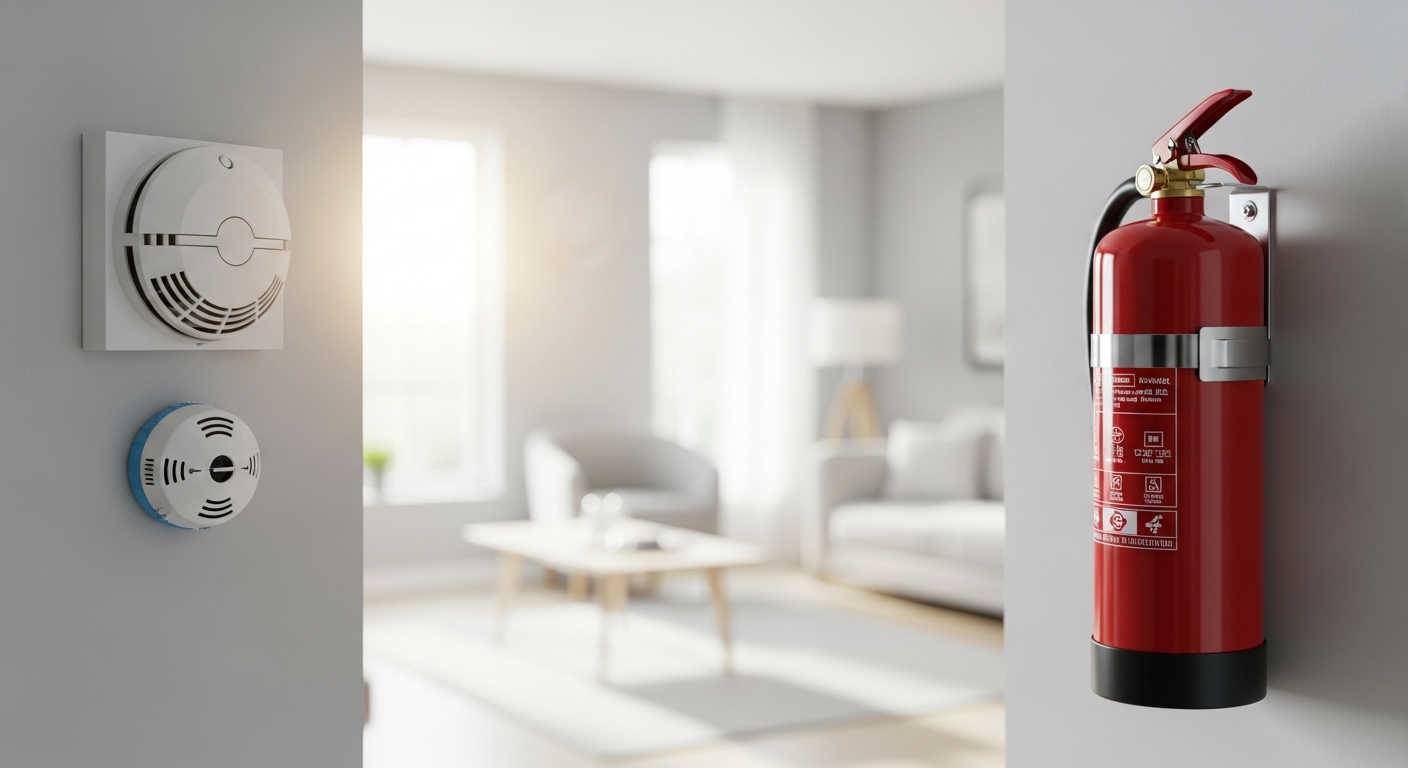
Fire safety code violations represent critical threats to life and property that demand immediate attention. According to the National Fire Protection Association (NFPA), fire departments respond to a home structure fire every 89 seconds in the United States, with many of these fires linked to code non-compliance (NFPA, 2023). This comprehensive guide provides homeowners with essential information about fire safety codes, common violations, and the resolution process to ensure their homes meet protective standards.
Understanding Fire Safety Codes
Fire safety codes establish minimum standards designed to prevent fires, facilitate safe evacuation, and protect first responders. These codes represent decades of fire science research and lessons learned from tragic fires. The International Code Council notes that fire codes have contributed to a 60% reduction in fire deaths per capita over the past 40 years (ICC, 2023). For a broader understanding of building codes, see our comprehensive guide to building code violations.
Key Fire Safety Standards
Several primary codes and standards govern residential fire safety:
International Fire Code (IFC): The IFC establishes comprehensive fire prevention and protection requirements for new and existing buildings. Updated on a three-year cycle, it addresses fire department access, fire protection systems, hazardous materials, and operational requirements.
International Residential Code (IRC): The IRC contains fire safety requirements specific to one- and two-family dwellings and townhouses. These requirements include fire separation between dwelling units, smoke alarm placement, carbon monoxide alarm requirements, fire sprinkler requirements where applicable, and egress requirements for safe evacuation.
NFPA 101 Life Safety Code: This NFPA standard provides comprehensive fire protection requirements focused on life safety, including means of egress provisions that ensure safe evacuation paths.
Common Fire Safety Code Violations
Smoke Alarm Violations
Smoke alarms are the most critical fire safety devices in homes, yet violations are extremely common. The NFPA reports that 3 out of 5 home fire deaths occur in homes without working smoke alarms or with no smoke alarms (NFPA, 2023).
Common smoke alarm violations include missing alarms in required locations (bedrooms, hallways, each level), non-functional alarms due to dead batteries or age, improper placement affecting detection capability, and alarms beyond their 10-year lifespan.
Current codes typically require smoke alarms in each sleeping room, outside each sleeping area, and on each level including basements. Interconnected alarms that sound together when one detects smoke are required in new construction and provide significantly better protection.
Carbon Monoxide Alarm Violations
Carbon monoxide alarms are required in homes with fuel-burning appliances or attached garages. The Consumer Product Safety Commission reports that carbon monoxide poisoning causes approximately 400 deaths and 4,000 hospitalizations annually in the United States (CPSC, 2023).
Violations include missing alarms near sleeping areas, non-functional alarms, and improper placement. Combined smoke and carbon monoxide alarms are available and can simplify compliance.
Egress Violations
Egress requirements ensure that building occupants can safely escape during fires. Common violations in residential properties include bedroom windows that don't meet minimum size requirements, window security bars without proper release mechanisms, blocked or obstructed exit paths, and missing or inadequate egress windows in basements.
The International Residential Code specifies minimum egress window dimensions: 5.7 square feet of openable area for ground floor windows, with minimum widths of 20 inches and minimum heights of 24 inches. Maximum sill heights of 44 inches ensure accessibility (IRC, 2021).
Fire Separation Violations
Fire separation requirements prevent fire spread between different areas of a building or between buildings. In residential construction, violations often involve attached garages with inadequate fire-rated construction between the garage and living space, missing self-closing devices on doors between garages and living areas, penetrations in fire-rated assemblies that compromise fire resistance, and unpermitted modifications that reduce fire separation.
The NFPA emphasizes that proper fire separation gives occupants critical time to escape and allows firefighters safer access for suppression activities (NFPA, 2023).
Need Help With Your Building Code Violation?
Get expert guidance from our team. Free consultation, 98% success rate, nationwide service.
Fire Sprinkler Violations
Fire sprinklers are required in new residential construction in many jurisdictions. Where required, violations may include missing or disabled sprinkler heads, inadequate water supply to the system, improper maintenance affecting system readiness, and modifications that compromise system coverage.
The Fire Sprinkler Initiative, supported by the NFPA, documents that fire sprinklers reduce home fire deaths by approximately 80% (FSI, 2023).
Electrical Fire Safety Violations
While covered in detail in electrical code requirements, electrical violations with fire safety implications include overloaded circuits creating heat hazards, improper wiring in concealed spaces, missing or improper arc fault protection, and use of extension cords as permanent wiring. For comprehensive guidance on electrical issues, see our complete guide to electrical code violations.
How Fire Safety Violations Are Discovered
Fire Department Inspections
Fire departments conduct inspections of residential properties under various circumstances, including fire prevention programs, permit inspections, and post-fire investigations. The National Fire Protection Association recommends regular home fire safety inspections as part of community risk reduction programs (NFPA, 2023).
Home Sales and Purchases
Real estate transactions often reveal fire safety violations through home inspections and smoke/carbon monoxide alarm verification requirements. Many jurisdictions require certification of working alarms before property transfer.
Insurance Requirements
Insurance companies may conduct property inspections that identify fire safety deficiencies. The Insurance Information Institute notes that fire safety violations can affect coverage availability and premiums (III, 2023).
Permit Inspections
When permits are obtained for renovation or repair work, inspectors may identify fire safety violations requiring correction before permit finalization. Our guide to the building permit process explains how inspections work.
Consequences of Fire Safety Violations
Life Safety Risks
The most serious consequence of fire safety violations is the increased risk of injury or death in the event of fire. The NFPA reports that the risk of dying in a home fire is 55% higher in homes without working smoke alarms (NFPA, 2023). Fire safety codes exist specifically to prevent these tragedies.
Property Damage
Fire safety violations can allow small fires to become large, destructive blazes. Proper fire separation, suppression systems, and detection devices all work to limit fire damage when fires do occur.
Insurance Implications
Fire safety violations may void insurance coverage or result in claim denials. Insurance policies typically require maintenance of required safety equipment. The Insurance Information Institute advises homeowners to maintain all required fire safety devices to ensure coverage remains valid (III, 2023).
Legal Liability
Property owners may face liability for injuries or deaths resulting from fire safety violations. The American Bar Association notes that failure to maintain code-compliant fire safety devices can establish negligence in legal proceedings (ABA, 2023).
Need Help With Your Building Code Violation?
Get expert guidance from our team. Free consultation, 98% success rate, nationwide service.
Resolution Process for Fire Safety Violations
Assessment
Begin by comprehensively assessing your property's fire safety status. Consider engaging a fire safety professional or home inspector to identify all violations, not just those initially noted. A complete assessment prevents repeated correction processes.
Prioritization
Address immediate life safety issues first. Installing working smoke and carbon monoxide alarms is typically the highest priority, followed by ensuring adequate egress and addressing electrical hazards.
Correction
Many fire safety corrections are relatively straightforward. Smoke and carbon monoxide alarms can be installed by homeowners. Egress window installation or modification may require permits and professional installation. Fire separation repairs often require licensed contractors and permits.
Verification
After corrections, verify compliance through appropriate channels. This may involve permit inspections for work requiring permits, fire department verification for fire prevention program violations, and documentation for insurance or real estate transaction purposes.
Prevention and Maintenance
Regular Testing
Test smoke and carbon monoxide alarms monthly. The NFPA recommends a simple monthly push-button test to verify alarm function (NFPA, 2023).
Battery Replacement
Replace batteries in battery-powered alarms at least annually, or as recommended by the manufacturer. Consider installing alarms with sealed 10-year batteries that eliminate the need for battery changes.
Alarm Replacement
Replace smoke alarms every 10 years and carbon monoxide alarms as recommended by the manufacturer (typically 5-7 years). Manufacturing dates are typically printed on the alarm body.
Escape Planning
Develop and practice a home fire escape plan. The NFPA recommends practicing escape plans at least twice annually, including nighttime drills (NFPA, 2023).
Conclusion
Fire safety code violations present serious risks that justify immediate attention. The protective value of smoke alarms, egress windows, fire separation, and other code requirements is documented in decades of fire safety research. Ensuring your home meets fire safety codes protects your family and property.
If you need help addressing fire safety violations or want a professional assessment of your home's fire safety compliance, contact PermitPatch at (323) 591-3717 for a free consultation. Our team can guide you through bringing your home into full compliance with fire safety requirements.
References
American Bar Association. (2023). Premises Liability and Fire Safety. ABA Publishing.
Consumer Product Safety Commission. (2023). Carbon Monoxide Safety. CPSC Reports.
Fire Sprinkler Initiative. (2023). Residential Fire Sprinkler Effectiveness. FSI Publications.
Insurance Information Institute. (2023). Fire Safety and Homeowner Insurance. III Publications.
International Code Council. (2023). Fire Code Development History. ICC Publications.
International Residential Code. (2021). Egress Requirements. ICC Publications.
National Fire Protection Association. (2023). Home Fire Safety Report. NFPA Publications.
Concerned About Fire Safety Compliance?
Get expert help with fire safety code violations. Free consultation available.
Schedule Free Consultation (323) 591-3717